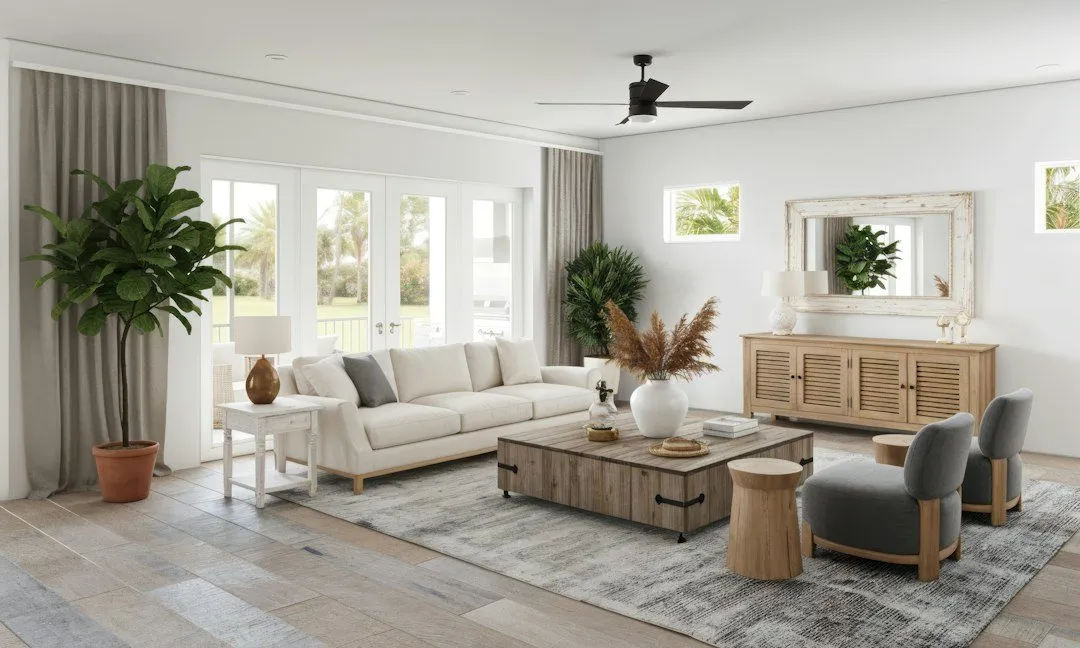
Interior designer vs decorator — these are not interchangeable titles. They describe different scopes, different training, and, in many projects, very different results.
What a decorator does
A decorator’s work is surface work: furniture, textiles, color, lighting fixtures, and arrangement. The goal is a room that reads as deliberate and well-assembled. A skilled decorator has a strong eye, good sourcing relationships, and knows how to build visual coherence.
What a decorator does not do is engage with the structure of a room. Walls, window configurations, ceiling heights, and built-in millwork are not within their scope. Neither is the relationship between rooms, or how a house flows. A decorator works with the space as it already exists.
In California, the decorator title carries no licensing requirement. There is no examination, no licensing board, and no continuing education mandate. The title is open to anyone.
What an interior designer does
An interior designer works from the architecture outward — from the structure before the surface.
A trained designer can produce construction documents and coordinate with architects and contractors. They make decisions that affect the building itself. They specify materials at a technical level: species, milling cut, finish, substrate, installation method, and sequencing. The scope requires fluency in building codes, material behavior, and how early decisions affect the build months later.
In California, the Certified Interior Designer (CID) designation is protected by state law. It requires passing a formal examination and completing continuing education. Interior design as a licensed discipline sits between architecture and decoration. It covers everything a decorator covers, and the structural layer that a decorator does not touch.
When each role is right
Furnishing and styling a completed space — new sofa, new textiles, rearranging — that is a decorator’s work.
If the project involves any change to what a room is actually doing, a designer is the right call. How light enters the space, how rooms connect, what the entry communicates — those are design questions. Renovation, new construction, or any project where the architecture is in question belongs in a designer’s scope.
Material specification is part of that same scope. Choosing white oak flooring is not just a preference. Which mill, which cut, which finish, how the board meets the threshold — those are technical decisions with long-term consequences.
How early matters
The most common mistake in renovation and new-build work is engaging a designer too late. By the time most owners call, the trades are already committed and the framing decisions are made. The meaningful questions have been answered by default.
A designer working from the beginning shapes the structure before concrete is poured. Sightlines, ceiling heights, window placement, and indoor-outdoor thresholds are resolved at that stage. Those decisions determine what is possible in every phase that follows. Once the framing is up, the options narrow sharply.
The studio’s approach to Orange County interior design starts at the structural level. Plan and flow are established first. Material and finish follow. Furniture comes well after those two are resolved.
For new builds specifically, the phases where decisions close — and what a designer must be engaged to influence — is covered in When to Bring a Designer Into a New Build.
What to ask when hiring
One question separates the two: do you produce construction documents?
A designer who can document and coordinate across trades is qualified for renovation and new-build work. One who cannot is not — regardless of the title they carry.
The studio offers the full scope through interior design services: initial plan, construction coordination, material specification, and final finish.
For a practical breakdown of fee structures and what drives the cost, What an Interior Designer Costs in Orange County covers the models and variables before you engage a studio.
Thinking about a project and not sure what kind of help fits? Get in touch.