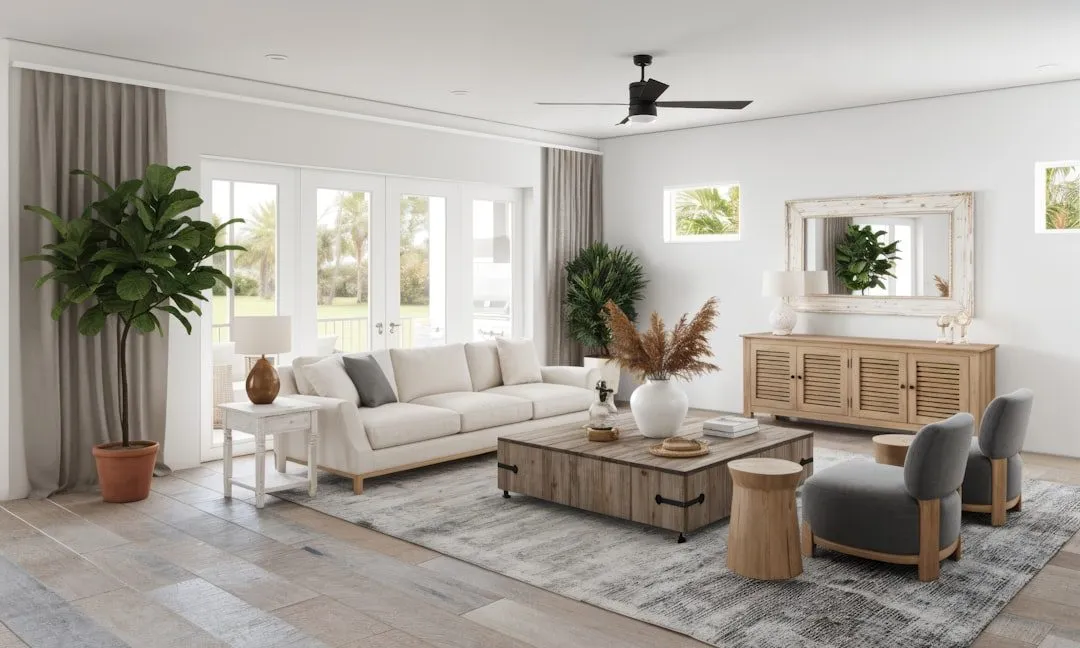
Modern coastal interior design has little to do with rope, anchors, or shades of seafoam. Done well, it’s simply a way of designing for the light and ease of living near the water — calm, material, and unforced. Here is how the studio approaches it.
Let the light lead
Coastal light is bright and directional. Rather than fight it, plan palettes around it: warm, low-chroma neutrals that hold up at midday, with depth introduced through texture and natural material instead of heavy color. A deeper look at building that palette is in A Coastal Color Palette That Holds Up to the Light.
Choose materials that age honestly
Salt air is unforgiving to finishes that pretend. Solid woods, natural stone, unlacquered metals, and honest plaster patina well — so a room looks better in five years, not worse. It’s the difference between a coastal look and a coastal home. The kitchen is often where these choices are most tested — an approach the studio explores in A Coastal Kitchen That Isn’t a Cliché.
Design for indoor–outdoor living
Near the water, the line between inside and out is the whole point. Consistent flooring and palette across that threshold, clean sightlines, and restraint with pattern make a home feel twice its size and wholly at ease. A detailed look at how to execute it is in Designing for Indoor-Outdoor Living on the Coast.
Edit, then edit again
The quiet of a good coastal room comes from what’s left out. A few honest materials, a limited palette, and well-made pieces with provenance read as far more considered than a room that tries to do everything. This is the approach behind the studio’s Orange County interior design. A similar restraint shapes the studio’s thinking on organic modern interior design — warmth through material rather than decoration.
Planning a coastal home? Get in touch.